
Make Your Goals More Fun With a Life Bingo Card
Learn how I turn yearly goals into a fun Life Bingo card. Add 24 ideas, randomize a printable board, and make personal growth a game you enjoy all year.
I believe in discipline. I believe in keeping promises to yourself, doing the work when motivation disappears, and building routines strong enough to survive an inconvenient week.
But I also believe we sometimes make personal growth far too serious.
We turn every goal into an obligation. We build color-coded plans, track five metrics, and judge ourselves for falling behind. Before long, the life we are trying to improve starts feeling like one more job we are failing to perform.
That is why I started making what I call a Life Bingo card.
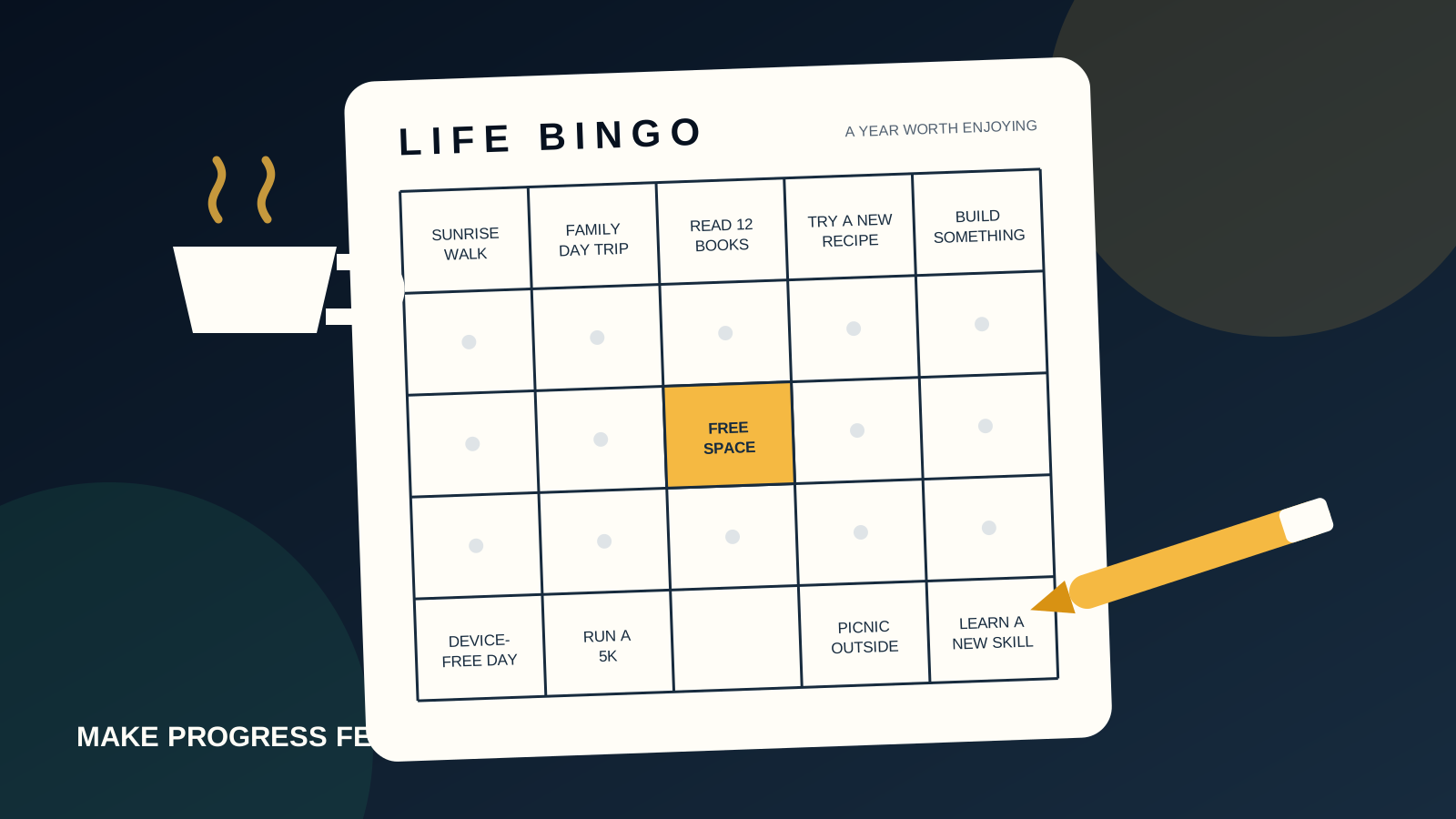
Once a year, I write down 24 things I want to do, experience, finish, or improve. Some are meaningful goals. Some are small habits. Others are there for no better reason than they sound fun. I randomize the list, place the items around a free center square, print the card, and try to earn bingo across every possible line.
It turns a static goal list into a game—and reminds me that becoming a stronger person should include enjoying the life I am building.
Ready to create yours? Use the free Life Bingo Card Generator to add 24 ideas, randomize the board, and print it.
Why Personal Growth Should Include More Fun
Discipline and enjoyment are not opposites.
Discipline helps you begin when a task is difficult. Enjoyment gives you another reason to return. When an activity is meaningful, interesting, or satisfying, consistency does not have to depend entirely on force.
That does not mean every workout, work session, or difficult conversation will become entertaining. Some important things will always require effort. The point is to stop adding unnecessary misery to the process.
You can take a walk through a neighborhood you enjoy instead of forcing yourself onto a treadmill you hate. You can learn to cook by trying meals you are curious about. You can build a reading habit with books you actually want to open. You can pursue family goals that create memories instead of treating every weekend like a productivity contest.
The fun is not a distraction from progress. Often, it is part of what makes progress sustainable.
Research on gamification deserves some restraint here. A systematic review of gamification and online engagement found promising effects in several settings, but the results varied and evidence for lasting effects was mixed. A bingo card is not magic. It is simply a playful structure that makes choices, progress, and small wins more visible.
What Is a Life Bingo Card?
A Life Bingo card is a five-by-five grid containing 24 personal goals and one free center square. Instead of numbers being called at random, you complete the experiences or actions written on the board.
You earn bingo when you complete five squares:
- Across a horizontal row
- Down a vertical column
- Along either diagonal
I take it one step further. I try to get bingo in every line. That keeps the game alive after the first five goals are complete and encourages me to revisit parts of the board I might otherwise ignore.
The random order is important. It creates combinations I would not deliberately design. A line might require a health habit, a family experience, a financial milestone, a new skill, and something adventurous. Suddenly, earning bingo means building a more balanced year—not obsessing over one category.
How My Yearly Life Bingo Ritual Works
My process begins with a messy list. I do not start by asking what would look impressive online. I ask what would make the year useful, memorable, healthier, calmer, or more interesting.
I include things such as:
- Taking a sunrise walk
- Finishing a personal project
- Planning a family day trip
- Going a month without soda
- Trying a new outdoor activity
- Saving toward something meaningful
- Calling an old friend
- Learning a practical skill
- Reading a certain number of books
- Doing something that makes me nervous in a good way
Then I narrow the list to exactly 24 items. The free space becomes a reminder to celebrate where I am now, not only where I am going.
Finally, I randomize the goals. I do not rearrange them to manufacture an easy win. The unusual combinations are part of the fun. They make me ask, “What could I complete this weekend that moves me closer to a line?”
That question works better for me than staring at a long resolution list and wondering where to start.
Choose 24 Goals You Will Enjoy Pursuing
The strongest Life Bingo card is not filled with 24 versions of “work harder.” It has range.
Try dividing your ideas into three groups before selecting the final list.
Eight small wins
These are squares you could complete in a day or weekend. They create early movement and prevent the board from feeling impossible.
Examples include visiting a local park, cooking a new meal, clearing one drawer, calling someone you miss, or spending one evening without your phone.
Eight meaningful commitments
These require repetition or planning. They might include finishing a course, building an emergency fund, completing a fitness event, maintaining a habit for 30 days, or finishing a project you have delayed.
These squares connect the game to real growth. They also work best when they are specific enough to recognize as complete. “Get healthy” is vague. “Take a 20-minute walk on 30 different days” gives you a finish line.
If you need help making those actions repeatable, read how small habits create lasting personal growth.
Eight experiences and adventures
These goals exist because life should contain anticipation. Plan a picnic, watch a meteor shower, take the family somewhere new, attend a live event, create something with your hands, or try the activity you keep saying you will do “someday.”
Not every square needs to make you richer, stronger, or more efficient. Enjoyment is allowed to be the result.
Five Rules for a Better Goal Bingo Card
1. Write goals you can recognize as complete
“Be happier” is a direction, not a bingo square. “Take six device-free Saturday mornings” is visible and measurable.
2. Include goals within your control
You cannot force another person to respond, guarantee a promotion, or control a market outcome. You can send the application, finish the proposal, follow a savings plan, or complete a research process.
Build squares around your actions whenever possible.
3. Mix effort levels
If every square requires six months, the board will sit untouched. If every square takes ten minutes, it will not challenge you. Combine easy wins, medium projects, and a few ambitious goals.
4. Do not fill the card with chores
Life Bingo should pull you toward the board. Responsibilities can be included, but balance them with curiosity, relationships, creativity, and play.
5. Make the square small enough to start
Your bingo item can represent a larger direction, but the path still begins with one action. If you tend to remain stuck in planning, use this guide to stop overthinking and make decisions faster.
Turn Your List Into a Printable Life Bingo Card
I built a simple tool so you do not need to draw the grid, resize text, or shuffle scraps of paper.
Open the free printable Life Bingo Card Generator, then:
- Replace the sample list with your own 24 items.
- Put one goal on each line.
- Select Randomize my card.
- Shuffle again if you want a different arrangement.
- Select Print or save as PDF.
- Put the printed card where you will see it.
Your goals remain in your browser. The tool does not send the list to SigmaMyself or require an account.
The printed page includes the SigmaMyself logo, a name and year field, the 24 randomized goals, and a highlighted free space. The controls disappear from the printout automatically.
Use the Card Without Turning Fun Into Pressure
There is a predictable danger here: taking a playful idea and turning it into another instrument for self-criticism.
Do not do that.
Missing a square does not mean the year failed. Changing a goal does not mean you cheated. An unexpected responsibility may become more important than something you selected months ago. The card serves your life; your life does not serve the card.
I use mine as a prompt, not a judge.
When I have an open weekend, I scan the board. Which square sounds good right now? Which one could include my family? Which unfinished line needs one manageable action? That little bit of structure helps me move without requiring a complete life-planning session.
This is the useful side of urgency: not rushing, but shortening the distance between an idea and a worthwhile experience. You can explore that distinction in how to act with purpose and useful urgency.
Connect the Bingo Squares to Small Habits
A bingo card makes goals visible, but habits do the repeated work.
Suppose one square says, “Complete a 5K.” The card gives you a destination. Your habit might be walking for 15 minutes after work three days each week. If another square says, “Read 12 books,” your habit might be reading ten pages before bed.
An if-then plan can make the next action clearer: If I finish lunch, then I will walk for ten minutes. Research on implementation intentions describes these plans as specifying when, where, and how a goal-directed action will happen. A meta-analysis of mental contrasting and implementation intentions found that these strategies can support goal attainment, although outcomes still depend on context and follow-through.
The Life Bingo card answers, “What would make this year meaningful and fun?” Your daily system answers, “What will I do next?”
You need both direction and repetition.
Make This Weekend the First Square
You do not need to wait for January. You do not need the perfect list. You do not need a new notebook, a complicated tracking system, or a dramatic reinvention.
Use this weekend.
Write down the experiences you keep postponing, the habits you want to strengthen, the people you want to spend time with, and the projects you would feel proud to finish. Add a few ideas that make you laugh or feel excited. Narrow the list to 24, randomize it, and print the result.
Then choose one square you can begin now.
Maybe you will earn your first mark this weekend. Maybe you will simply schedule the action. Either way, the board has already done its job: it moved a goal out of your head and into your life.
Build your card with the Life Bingo Card Generator, or explore the broader SigmaMyself personal-growth path if you want more structure.
Make progress. Collect experiences. Enjoy the game.
Frequently Asked Questions
What should I put on a Life Bingo card?
Use a mixture of small wins, meaningful goals, new experiences, relationship goals, health actions, creative projects, and things you want to do purely for fun. The best list reflects your real life rather than someone else’s definition of success.
Do I need to start Life Bingo in January?
No. You can create a card for a calendar year, your birthday year, the next twelve months, a season, or even one month. Start when the idea feels useful.
Should the center square be free?
The generator uses a traditional free center square, giving you 24 goals on a 25-square board. I use it as a reminder that your present life deserves appreciation while you work toward what comes next.
What happens if my goals change?
Change them. A goal chosen months ago should not control you after your circumstances or priorities shift. Update the list, generate a new card, and continue with purpose rather than guilt.
More on My Journey

How to Build Wealth Through Discipline and Small Habits
Learn how to build wealth through financial discipline, automated habits, emergency savings, debt payoff, income growth, and long-term investing.
Read article
Take Control of Your Health With Small Daily Habits | Sigma
Take control of your health with a short daily walk and small, realistic habits for better movement, drinks, food, sleep, and lasting progress.
Read article
How I Transformed My Fitness Journey: A Step-by-Step Guide to Losing Weight and Eating Right
Follow my practical fitness journey through weight loss, healthier eating, sustainable routines, setbacks, and lessons for building habits that last.
Read article