
Trading Discipline Over Guesswork | Signalysis
Build trading discipline with automated market research that reduces chart noise and emotional guesswork. Explore Signalysis for clearer market setups.
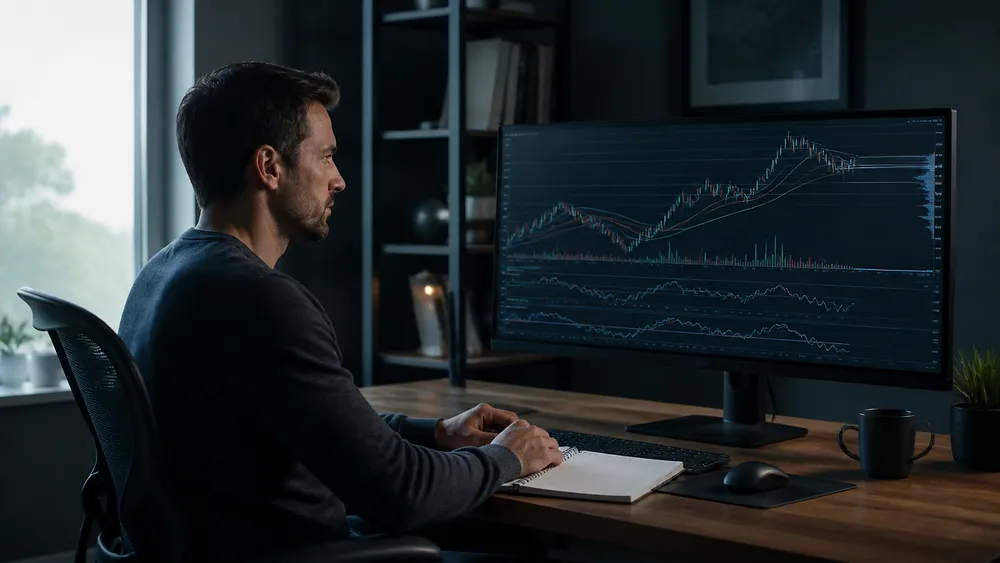
Markets do not care how confident, anxious, motivated, or frustrated you feel.
A setup does not become stronger because you want it to work. A losing position does not recover because you refuse to accept that your original idea may have been wrong. More charts, opinions, and indicators do not automatically produce a better decision.
That is the uncomfortable reality of market analysis: access to information is not the same as clarity.
The challenge for many self-directed traders and investors is not finding more data. It is developing the discipline to interpret that data consistently without allowing fear, excitement, hesitation, or ego to control the process.
That is where trading discipline and automated market research can work together.
I built Signalysis to organize live stock and cryptocurrency market data into a clearer research view. It brings trend, momentum, indicator readings, price patterns, reference levels, and model context together so users can spend less energy sorting through clutter and more energy reviewing the evidence.
It does not predict the future or make decisions for you.
It creates structure—because structure is often what stands between an intentional decision and an emotional reaction.
The Trap of Emotional Trading
Most trading mistakes do not begin with a complete lack of knowledge. They begin when someone abandons what they know under pressure.
A trader may understand risk management, wait for confirmation, and enter the day with a plan. Then the market moves quickly, and discipline begins to weaken.
Common reactions include:
- Over-trading: Taking additional setups simply because the market is moving.
- Revenge trading: Attempting to immediately recover a loss with another position.
- Fear of missing out: Entering late because a price move looks too exciting to ignore.
- Hesitation: Seeing a valid setup but failing to act because the previous trade lost.
- Confirmation bias: Searching for indicators or opinions that support an existing belief.
- Moving the goalposts: Changing the original thesis after the market contradicts it.
These are not purely technical problems. They are problems of emotional discipline.
Motivation cannot solve them consistently. Motivation rises when trades are working and disappears when conditions become uncomfortable. A repeatable system is more dependable because it establishes what deserves attention before emotion takes control.
This reflects a broader lesson I have written about before: discipline matters more than motivation whenever results depend on consistent execution.
The goal is not to become emotionless. That is unrealistic.
The goal is to stop allowing every emotion to become an instruction.
Cutting Through the Noise for Mental Clarity
Open enough charts and almost any market opinion can appear correct.
One indicator may look bullish while another looks bearish. A short timeframe may show momentum while a longer timeframe shows weakness. One price pattern appears convincing until another analyst draws the levels differently.
Soon, the research process becomes a maze:
- Too many indicators
- Too many timeframes
- Too many conflicting opinions
- Too many alerts
- Too many opportunities
- No consistent method for deciding what matters
This creates decision paralysis. The trader keeps looking because they do not trust what they are seeing.
Mental clarity in trading does not come from watching everything. It comes from deciding what information matters and reviewing it consistently.
Signalysis currently organizes four primary market measures into one research view:
- Trend direction
- RSI readings
- MACD readings
- Price patterns
The platform then presents indicator readings, model context, reference price levels, and a probabilistic scenario for independent review.
This is not about adding another layer of noise. It is about organizing existing market information into a consistent format.
Trading Discipline and Automated Market Research
Automation is often misunderstood.
The purpose of automation is not to surrender responsibility. It is to remove repetitive work from the parts of a process where consistency matters.
Signalysis handles the work of collecting current market data, calculating supported indicators, and organizing the results. The user still evaluates the output, considers personal risk, and decides what—if anything—to do.
That distinction matters.
Technical analysis automation should support judgment, not replace it.
The platform is designed around a simple process:
- Enter a supported stock or cryptocurrency symbol.
- Select the timeframe you want to examine.
- Review the organized trend, momentum, pattern, and reference-level data.
- Compare the output with your rules and broader research.
- Make your own decision.
Without a structured process, people frequently change how they evaluate the market from one day to the next. They may rely on RSI today, a social-media opinion tomorrow, and an emotional reaction the day after that.
With a system, the inputs remain more consistent.
Consistent inputs do not guarantee profitable outcomes. They do, however, make it easier to recognize whether you followed your process.
That is the foundation of systematic trading habits.
A More Disciplined Market-Research Routine
Software alone cannot create discipline. It must be used inside a disciplined routine.
Here is a practical framework for using automated market research without allowing it to become another source of impulsive signals.
1. Define the Question Before Opening the Chart
Do not begin with, “What should I trade?”
Use a narrower question:
- What is the current trend in the timeframe I follow?
- Are momentum and trend aligned?
- Where are the relevant reference levels?
- What evidence would invalidate my current interpretation?
- Does this setup meet my predetermined criteria?
A specific question keeps research focused.
2. Review the Same Evidence in the Same Order
Create a repeatable sequence. For example:
- Trend
- Momentum
- RSI
- MACD
- Price pattern
- Reference levels
- Risk and invalidation
Reviewing information in a fixed order reduces the temptation to jump toward whichever signal supports your preferred conclusion.
3. Separate Analysis From Execution
Researching a ticker does not require taking a position.
One of the most important habits in market analysis is learning to finish the research process and still decide to do nothing.
“No action” is a legitimate conclusion.
This is similar to learning how to stop overthinking and make decisions faster: the goal is not to make every decision immediately. It is to establish enough structure that you know when the available evidence is sufficient.
4. Record the Reason Behind the Decision
Before acting, write down:
- What evidence supports the setup?
- What evidence contradicts it?
- What would prove the thesis wrong?
- How much risk is acceptable?
- Did the setup satisfy the original rules?
This creates accountability.
You can later evaluate the quality of the process instead of judging yourself only by the outcome. A disciplined decision can still lose, and an impulsive decision can occasionally win. Confusing the outcome with the quality of the decision is how bad habits survive.
5. Review Your Behavior, Not Only the Market
At the end of the session, ask:
- Did I follow my process?
- Did I enter because the evidence supported it or because I felt urgency?
- Did I change my rules after the fact?
- Did I continue trading after my judgment became emotional?
- What is one behavior I should repeat or correct tomorrow?
Progress comes from these small reviews. As with any habit, a repeatable improvement process becomes stronger through small wins, not dramatic promises. That is the same principle behind building momentum with small habits.
Why Removing Emotion From Trading Requires a System
“Remove emotion from trading” sounds simple, but emotions cannot be switched off on command.
A better objective is to reduce the number of decisions you must improvise while under pressure.
When your process already defines what you will review, what qualifies as evidence, and what invalidates a setup, emotion has less room to rewrite the rules.
This principle works far beyond trading.
A prepared meal makes healthy eating easier. A scheduled walk makes daily movement more likely. A written task list reduces procrastination. A defined research routine reduces reactive market decisions.
In every case, the system protects the decision you made when your mind was clear from the impulses that appear later.
That is the real value of structure.
My Journey Building Signalysis
Signalysis grew from a personal realization: more information was not creating more control.
I could review charts, compare indicators, watch different timeframes, and consume more market commentary. But the larger problem remained. Every additional source created another opportunity to hesitate, overthink, or interpret the market emotionally.
The turning point came when I stopped asking, “What other indicator can I add?” and started asking a better question:
How can I make the research process more consistent?
I wanted a system that could collect the technical information, organize it without emotion, and present it in a format that was easier to review.
That became Signalysis.
Building it was not only a software project. It was an extension of the same personal-growth work behind SigmaMyself: building discipline, creating better habits, reducing unnecessary mental noise, and taking purposeful action.
The objective was never to build a machine that pretends to know what the market will do next.
The objective was to build a research tool that would show the available evidence clearly and then leave the decision where it belongs—with the user.
What Signalysis Can—and Cannot—Do
Signalysis can help you:
- Organize live stock and cryptocurrency market data
- Review trend, RSI, MACD, and price-pattern information
- Examine reference price levels
- Compare multiple measures in a consistent research format
- Reduce the time spent switching between disconnected charts
- Build a more systematic research routine
Signalysis cannot:
- Guarantee a profitable trade
- Eliminate market risk
- Predict every market movement
- Understand your complete financial circumstances
- Replace independent judgment or professional financial advice
- Turn an undisciplined process into a disciplined one without your participation
That final point is important.
The tool creates a clearer environment, but the user still has to practice patience, follow rules, manage risk, and accept uncertainty.
Investor.gov similarly advises users to understand the assumptions and limitations of automated investment tools rather than treating their output as guaranteed or personalized guidance. Review its automated-tool guidance here.
Structure Creates Freedom
Discipline is sometimes mistaken for restriction.
In reality, structure creates freedom.
A fitness routine frees you from deciding whether to exercise every morning. A budget frees you from wondering where your money went. A focused work system frees you from constantly reacting to the next distraction.
A market-research system can provide the same benefit.
It reduces the amount of attention spent collecting scattered information and creates more space for deliberate thought. It will not remove uncertainty from the markets, but it can help remove unnecessary disorder from the research process.
That is the connection between trading discipline and automated market research.
The value is not doing more analysis. It is performing the right analysis consistently, understanding its limitations, and refusing to let emotion turn every market movement into an urgent decision.
Bring More Clarity to Your Market Research
If you are tired of switching between charts, comparing conflicting indicators, and second-guessing every setup, explore Signalysis.
You can create a free account, build a watchlist, and see how a more organized research process fits into your routine.
Use the data. Review the evidence. Respect the risk. Make your own decision.
That is discipline over guesswork.
Risk disclosure: Signalysis provides automated, impersonal market research for informational and educational purposes. Its outputs are probabilistic and are not personalized investment recommendations. Trading stocks and digital assets involves substantial risk, including possible loss of principal.
More on Discipline & Motivation

How to Stop Overthinking and Make Decisions Faster | Sigma
Learn how to stop overthinking, escape analysis paralysis, make decisions faster, and take purposeful action without becoming reckless or impulsive.
Read article
Small Habits, Big Results: Lasting Personal Growth
Learn how small daily habits create lasting personal growth through habit stacking, environment design, simple routines, progress tracking, and a 30-day plan.
Read article
Personal Growth Guide: Unlock Your Potential | Sigma
Use this practical personal growth guide to build self-awareness, set meaningful goals, create better habits, strengthen resilience, and reach your potential.
Read article